
The network managed by the FFG
- should specifically support the development of technology-based R&D projects along the entire innovation chain – from idea to market launch.
- has a focus on the development of viable (regional) value chains, regulatory aspects, and the scalability of solutions in different agricultural and food systems.
Products, processes, and services should serve to secure regional supply in a global context with the following thematic focuses:
- Health Innovation and Prevention: Interdisciplinary approaches for the early detection of diseases, zoonotic infectious events, and the development of new treatment methods and hygiene measures.
- Resistance avoidance and monitoring: Development of digital systems, biosensors and technologies for monitoring resistant pathogens in humans and animals, in the environment, and in foodstuffs.
- Sustainable treatment management in system-critical economic segments Development of innovative technologies to reduce the use of medicines, herbicides, and fungicides; cross-species improvement of health, resilience, well-being, and quality of life through prevention, diagnostics, and targeted, needs-based individualised therapy.
The network aims to initiate innovative solutions and thereby
- marketable products, processes, or services can be developed
- the corporate partners receive a strengthening of their market position
- Risks for businesses are minimised, a technological lead is created, the economic base is strengthened, and growth is promoted.
- networking with other industries to increase market reach
- a mutual enrichment and the initiation of practical and research cooperations are taking place
- Service and R&D contracts are achieved for the partners, with concrete development lines derived from synergistic potential in the competence fields of the network partners, which can be divided into the areas of Automation/ICT, Analytics/Diagnostics, in Biotechnology and Food Technology, and Primary Production (Fig. 2). Cross-cutting expertise, such as knowledge transfer and socio-economic concerns, is a further competence field.
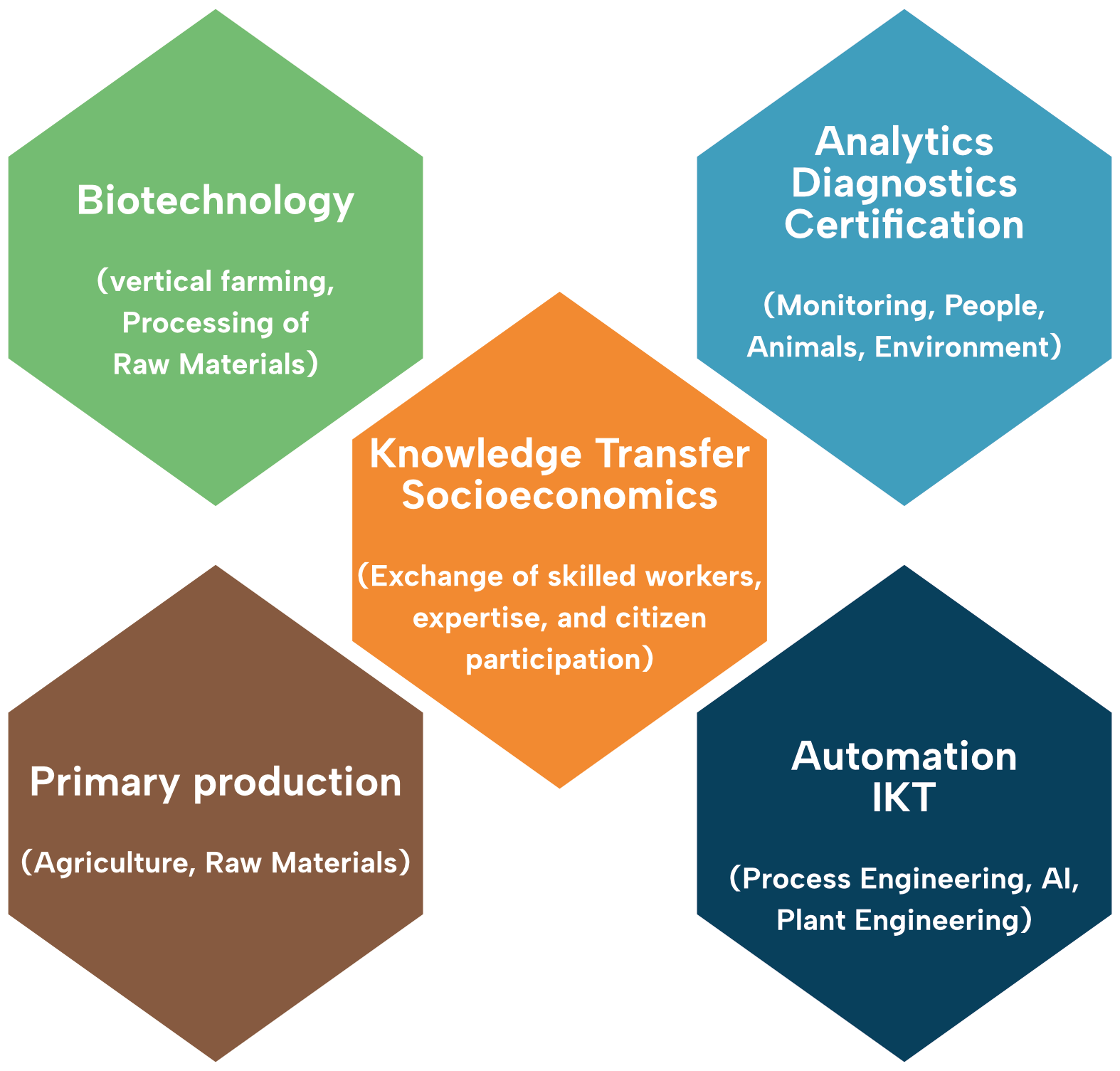
Core strategies along the value chain as part of the network are:
- Development of technology-supported solutions for the early detection, prevention and control of resistance development and spread across all organism groups.
- Promotion of alternative control and prevention approaches beyond chemical agents
- Reduction of active ingredient pressure in human and animal husbandry, agriculture and the environment
- Building sustainable production systems that minimise the emergence and spread of resistance
The network brings together companies and research institutions and promotes the international transfer of knowledge and technology. The partners, who come from a range of disciplines (Fig. 3), work together to develop innovative solutions.
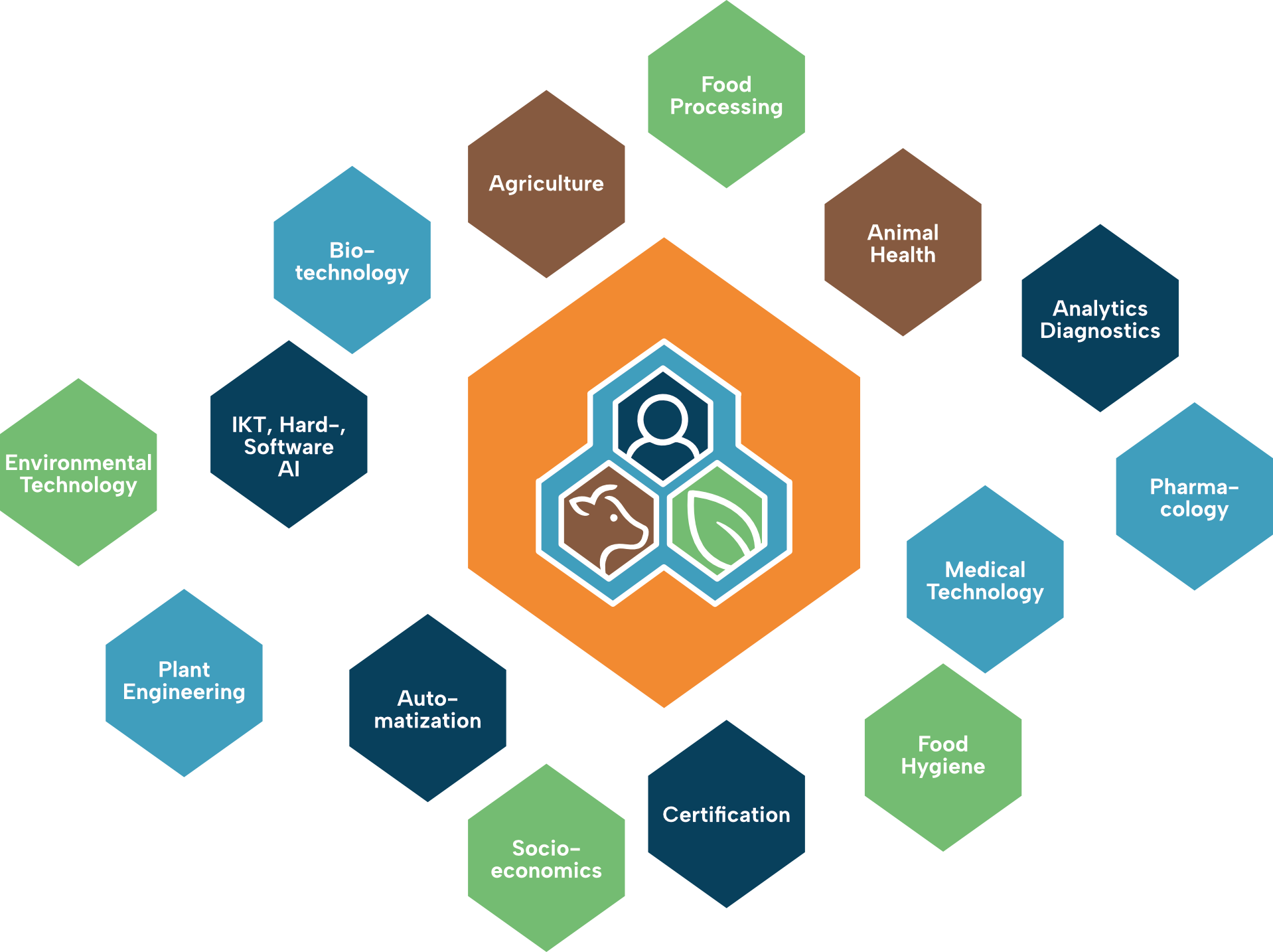
The economic Use for the German network partner can be summarised as follows:
- Development of joint technological innovation projects with high market potential
- Involvement of companies and/or research institutions abroad
- Easy access to technology and knowledge transfer via network management
- Increasing innovation capacity and competitiveness through international cooperation
- Cooperation with German and foreign network partners for joint R&D projects
- Making previously unsustainably used resources available
- Coordinated knowledge, education and technology transfer
The Use for the foreign network partner is
- Acquisition of knowledge, expertise, usable technologies
- Exchange of knowledge and insights
- Transfer of products and methods
- Access to German partners (companies, research institutions)